One trip, I missed my favorite pre-flight coffee because the security line stretched way further than I thought was possible… that’s when I took the time to learn more about TSA PreCheck and Global Entry.
Both programs promise faster screening, which means more time to grab that pre-flight coffee instead of standing in line. But when it comes down to Global Entry vs. TSA PreCheck, which one is better for you?
The answer depends on how often you travel, where you travel, and what you value most when flying.
Let’s break down the difference between Global Entry and TSA PreCheck so you can decide which program makes the most sense for your travels.
What is TSA PreCheck?

TSA PreCheck is run by the Transportation Security Administration (TSA), and it’s designed to speed you through airport security in the U.S. With PreCheck, you get access to shorter, dedicated security lanes at more than 200 airports.
The perks are simple but powerful:
- You don’t need to take off your shoes, belt, or light jacket.
- Laptops and 3-1-1 liquids stay in your bag.
- Security lines are usually much shorter and faster.
For frequent domestic travelers, TSA PreCheck can save a ton of time and hassle. On average, wait times in PreCheck lanes are under ten minutes, compared to much longer waits in regular lines.
The application process is also straightforward. You apply online, pay an $85 fee (good for five years), and then schedule a short in-person appointment for fingerprinting and a background check.
What is Global Entry?

Global Entry is run by U.S. Customs and Border Protection (CBP). While it includes all the benefits of TSA PreCheck, its main focus is international travel.
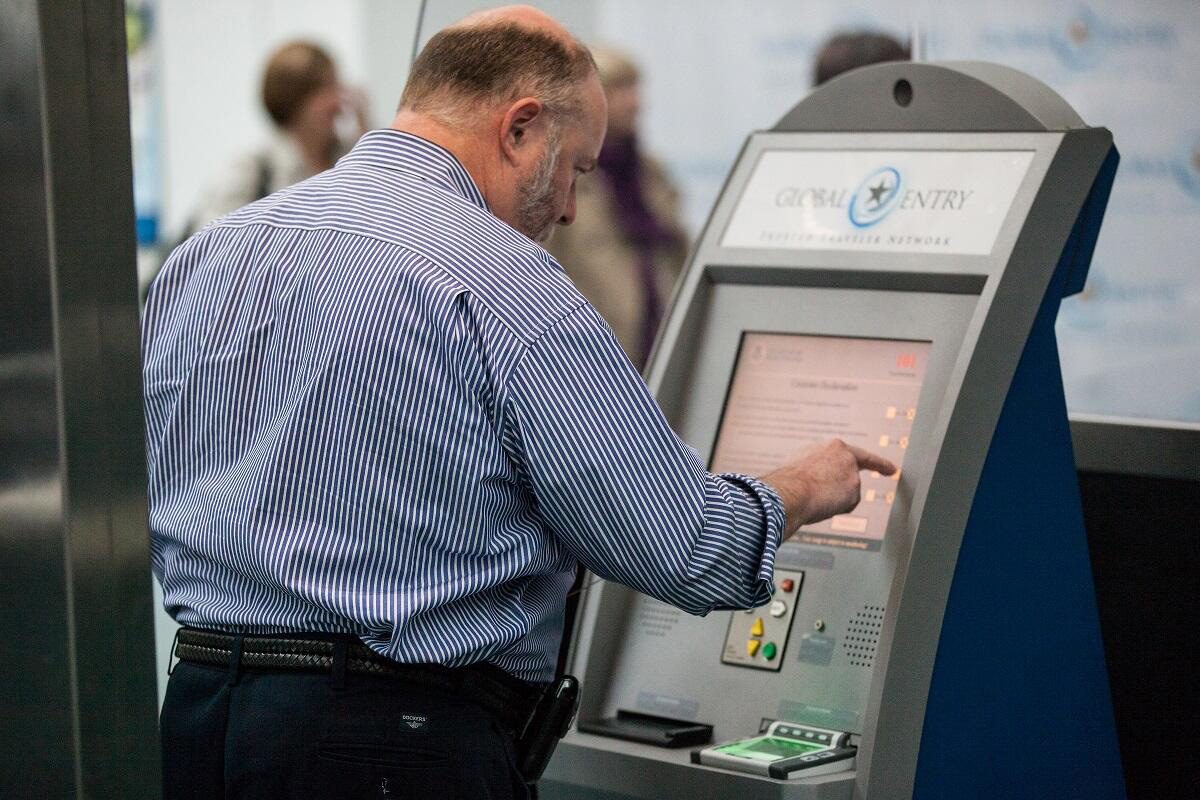
Global Entry allows you to skip long customs lines when you re-enter the United States from abroad. Instead of filling out paper forms and waiting, you use a kiosk or facial recognition system to check in and head straight to baggage claim.
Here’s what you get with Global Entry:
- Expedited re-entry into the U.S. at airports and land borders.
- Access to TSA PreCheck for domestic flights (yes, it’s included in your membership).
- Faster processing overall for international trips.
The application process is more detailed than TSA PreCheck’s. You apply online, pay a $120 fee (also valid for five years), and then schedule an in-person interview at a Global Entry Enrollment Center. The interview is a little more in-depth, since Customs and Border Protection needs to verify your travel history and background.
The main differences between Global Entry and TSA PreCheck
So, TSA PreCheck vs. Global Entry — what sets them apart?
International vs domestic focus
- TSA PreCheck is perfect if you primarily travel within the United States.
- Global Entry is best for international travelers, since it includes both expedited customs and TSA PreCheck.
Cost
- TSA PreCheck costs $85 for five years.
- Global Entry costs $120 for five years.
- The $35 difference is minimal, but the application process for Global Entry is more involved.
Application process
- TSA PreCheck requires a background check and fingerprinting, but appointments are generally quicker and easier to schedule.
- Global Entry requires a more extensive interview, and in some areas, it can be tough to get an appointment.
Convenience
- TSA PreCheck saves you time at the security line before your flight.
- Global Entry saves you time both at security (since it includes TSA PreCheck) and when returning to the U.S. after an international trip.
Global Entry vs. TSA PreCheck: Which should you choose?

Want to know what a travel expert suggests? Pilot Captain Steeeve says TSA PreCheck is worth if you travel more than twice a year. As for Global Entry, he says it’s not necessary if you rarely fly internationally, but if you cross borders a couple of times a year or more, it’s absolutely worth it.
In other words, the right choice depends on the type of traveler you are. In general, you can also go by these guidelines:
- If you mostly travel domestically, TSA PreCheck will likely be enough. It’s cheaper, easier to sign up for, and gives you the biggest time savings if you’re hopping between U.S. cities.
- If you travel internationally at least once a year, Global Entry is worth it. Even one international trip makes the customs benefit worthwhile, and since it includes TSA PreCheck, you’ll have the best of both worlds.
- If you’re not sure how often you’ll travel, think about the next five years. Both memberships are valid for that long, so if you expect your travel habits to expand (say, with more international trips in the future), Global Entry may be the smarter investment.
Common questions travelers ask

1. Does Global Entry automatically include TSA PreCheck?
Yes. If you’re approved for Global Entry, you’ll also get a Known Traveler Number (KTN), which grants you TSA PreCheck benefits.
2. Can I apply for both Global Entry and TSA PreCheck?
You don’t need both. Global Entry already comes with TSA PreCheck.
3. How long does it take to get approved?
Processing times vary. TSA PreCheck is often faster, sometimes just a few weeks. Global Entry can take longer, especially if interview slots are limited at your local enrollment center.
4. Is the background check strict?
Both programs require a background check. Past criminal offenses, customs violations, or incomplete applications can result in denial.
5. Can kids use Global Entry or TSA PreCheck?
Children 12 and under can use the PreCheck lane if they’re traveling with a parent who has it. For Global Entry, every traveler, regardless of age, needs their own membership.